
If you have searched for “business brokers near me” or asked, “How can I sell my business for the best possible outcome?” you are already facing one of the most important decisions of your ownership journey.
Selling a company is not simply a listing event. It is a financial, operational, and personal transition that often takes months to prepare and complete. Across Florida, Texas, Alabama, Mississippi, and Louisiana, buyers are active: but they are selective. They want clean financials, dependable cash flow, strong employees, and a business that can operate without the owner carrying every decision.
The truth is, the best time to begin preparing for a sale is usually before you are ready to announce one.
1. Start Exit Planning Before You Need to Exit
Many owners delay planning because the business is still performing well. Others are simply too busy running the company to think about what comes next.
That is understandable: but waiting can reduce your options.
Exit strategy planning gives you time to understand your current position, identify weaknesses, and improve the business before buyers begin reviewing it. If you want to sell in 12 months, you may focus on financial cleanup, confidentiality, and positioning. If you have three to five years, you may have time to strengthen management, increase recurring revenue, improve margins, or reduce your personal involvement.
This distinction matters across Gulf Coast markets. A manufacturing company near Mobile, Alabama, a distribution company in Houston, Texas, a hospitality business in Pensacola, Florida, or a construction company serving the Mississippi Gulf Coast may each attract different buyers. However, every buyer wants a company with a credible future.
Mike Steward’s book, Before the Clock Decides, emphasizes a simple but important idea: you will eventually leave your business, whether you plan the timing or circumstances decide it for you.
Start planning while you still have choices. That is how you protect value and create a more controlled transition.
2. Know What Your Business Is Really Worth
Your business may represent your largest personal asset. Guessing at its value is not a strategy.
A professional valuation gives you a market-based view of what buyers may realistically pay. It can also reveal the difference between your current value and your potential value: often called the “value gap.”
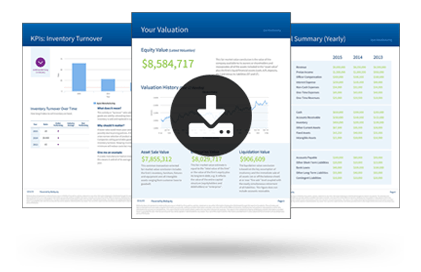
Our business valuation services consider comparable transactions, cash flow, industry conditions, assets, liabilities, and the transferability of the company. The goal is not to create an inflated number. The goal is to establish a defensible starting point for pricing, planning, and negotiation.
Buyers generally focus on cash flow, not revenue alone. They want to know whether the business can support debt payments, provide a reasonable living for the new owner, and continue producing results after the transition.
They may also review:
- Three years of profit and loss statements
- Federal tax returns
- Current year-to-date financials
- Owner compensation and personal expenses
- Equipment, inventory, and lease obligations
- Customer concentration and recurring revenue
- Employee retention and management depth
- Legal, environmental, licensing, or compliance issues
Keep in mind that a valuation is not the same thing as a guaranteed sale price. The marketplace ultimately determines value. Still, understanding your numbers early helps you make better decisions and prevents you from entering negotiations based on emotion.
3. Make the Business Transferable: Not Just Profitable
A profitable business can still be difficult to sell if too much of its value is tied to the owner.
Ask yourself: What happens if you are unavailable for 30 days? Can your team serve customers, make purchasing decisions, manage scheduling, and resolve problems without you?
Buyers pay more for predictability. They are looking for a “turnkey operation”: a business with documented systems, capable employees, and customer relationships that can transfer to new ownership.
To improve transferability:
- Document core processes. Create practical operating procedures for sales, hiring, scheduling, purchasing, quality control, and customer service.
- Delegate key relationships. Customers and vendors should know and trust more than just the owner.
- Develop management depth. A capable general manager or department leader can reduce buyer concerns about continuity.
- Track recurring revenue. Service contracts, subscriptions, maintenance agreements, and repeat customer metrics can make future income easier to understand.
- Separate personal and business expenses. Add-backs may be appropriate, but they must be clearly documented and defensible.
This applies whether you own a software company in Tampa, a preschool in Baton Rouge, a franchise in Fort Myers, or a home-services company operating across coastal Texas.
If you ignore owner dependency, buyers may view the business as a job rather than an investment. If you address it early, you make the company easier to finance, operate, and transfer.
4. Understand How to Sell a Business Without Disrupting It
Many owners begin researching how to sell a business by thinking about advertising. Marketing matters, but it is only one part of the process.
A well-managed sale typically includes:
- Confidential preparation and valuation
- A clear description of the business and its opportunity
- Targeted outreach to qualified buyers
- Confidentiality agreements before sensitive information is shared
- Buyer screening and financial qualification
- Organized due diligence
- Negotiation of price, terms, structure, and transition support
- Coordination with your CPA and attorney
- Closing and post-closing transition planning

Confidentiality deserves special attention. If employees, customers, competitors, or vendors learn about a possible sale too early, uncertainty can damage the business you are trying to sell.
That is why qualified buyers are often approached discreetly rather than through broad public announcements. Buyers may come from outside your immediate city or even outside your state. A buyer in Dallas may be interested in a Gulf Coast distribution company. An operator from Atlanta may be looking at a Florida hospitality business. A strategic buyer in Houston may see value in a specialized manufacturer near Corpus Christi.
This is also why a search for a business broker Florida or business broker Texas should not be limited to geography alone. Regional market knowledge, valuation experience, buyer access, and confidentiality are more important than simply choosing an advisor located in the same city.
Our selling process is designed to move from initial conversation and valuation through marketing, screening, negotiation, due diligence, and closing while helping you keep operating the business.
5. Prepare for the Gulf Coast Buyer’s Questions
Gulf Coast businesses benefit from diverse regional economies. Florida has strong demand in hospitality, healthcare-related services, franchising, and home services. Texas supports manufacturing, software, energy-related services, logistics, and distribution. Alabama and Mississippi have active manufacturing, construction, marine, and service sectors. Louisiana brings opportunities in hospitality, industrial services, logistics, and specialized businesses.
That variety creates opportunity: but it also means buyers will ask specific questions about your market.
Expect questions such as:
- How dependent is the business on tourism or seasonal demand?
- Are customers concentrated in one city, industry, or account?
- How would storms, hurricanes, or supply-chain disruptions affect operations?
- Is the workforce stable and properly trained?
- Are leases, licenses, franchise agreements, and permits transferable?
- Is equipment maintained and included in the transaction?
- What growth opportunities remain in the local and regional market?
- Can the business expand beyond its current Gulf Coast territory?
Do not wait until a buyer asks these questions to prepare answers. Organize the information in a secure data room and address potential concerns before they become negotiation problems.
A buyer does not expect perfection. A buyer does expect transparency, preparation, and a reasonable explanation for unusual results.
6. Choose the Right Level of Exit Support
Not every owner is ready to list immediately. Some need clarity. Others need accountability and operational coaching. Some are ready for a discreet sale managed from start to finish.
Our team generally views exit support as a three-tier ladder:
- Vision Fox Owner Clarity Engagement : A business valuation and market reality check to help you understand what your company may be worth and what needs attention before a sale.
- Vision Fox Private Partnership : A 12-month, founder-led coaching relationship for experienced owners who want to improve value, strengthen operations, and prepare personally for their next chapter. Learn more about Vision Fox Business Advisors.
- Discreet Business Brokerage : Professional, quiet sales management for owners ready to identify qualified buyers, negotiate terms, manage due diligence, and move toward closing.
Mike Steward has personally bought, built, sold, and implemented franchise systems in businesses. That practical experience matters because selling a company is not only about paperwork. It is about leadership, timing, people, numbers, and the decisions that shape your future.
7. Take the First Step While You Still Have Time
You do not have to decide today that you are selling. You do need to stop postponing the conversation.
Begin by gathering your financial statements, reviewing your owner dependency, considering your preferred exit date, and speaking with qualified advisors. You can also review the pre-sale tune-up resources for practical ways to improve your company before it reaches the market.
The best exit is rarely the one forced by burnout, illness, conflict, or financial pressure. It is the one you prepare for deliberately: while the business is healthy and you still have options.
If you own a business in Florida, Texas, Alabama, Mississippi, Louisiana, or another Gulf Coast market, our team can help you understand your value, evaluate your readiness, and determine what should happen next. Contact Gulf Coast Business Broker for a confidential conversation.